Browse by Classification
Browse by Number of Styles
Browse by Source
And Finally…
Category Archives: Humanist Sans Serif
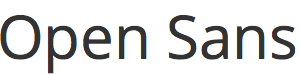
Open Sans
View the web font specimen sheet.
A humanist sans serif font designed by Steve Matteson.
Open Sans was designed with an upright stress, but still feels humanist due to its open apertures, double-decker g, and humanist italic. It has a similar x-height to Verdana, but has a lighter stroke weight, and even more clarity (legibility) at smaller sizes. The bold feels a bit heavy, but retains legibility. There is also a semi-bold for use when the bold is too heavy.
Open Sans comes in 10 styles. It holds up well cross browser. The whole family is available on both Typekit and Google Web Fonts.
Filed under 10 Styles, Google Fonts, Humanist Sans Serif, TypeKit
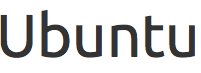
Ubuntu
View the web font specimen sheet.
A sans serif open license font family, funded by Canonical and implemented by Dalton Maag.
Ubuntu has some quirky elements, such as the corners created where shoulders meet stems on the letters a, r, n, m, h, p, q, and u. The quirks don’t undermine the overall texture, rhythm, or readability of the font, but it does give text a slightly “futuristic” feel which may or may not be appropriate for a project.
Even with the “futuristic” feeling, I categorize Ubuntu as a humanist sans because it has generous apertures, bowls with implied stress (on the b, d, q, p), a curved foot on the lowercase l, and a relatively humanist italic.
Ubuntu’s x-height is slightly smaller than Verdana, yet holds up very nicely at smaller sizes due to generous apertures and bowls. The bold weight is a bit heavy for my taste, though it is still legible on screen. While a semi-bold is available, it is not heavy enough to create a good contrast to the regular weight.
Ubuntu comes in 8 styles. I’ve tested the usual 4 plus the semi-bold, and they hold up beautifully cross browser. The whole family is available on both Google Web Fonts and Typekit.
Filed under 8 Styles, Google Fonts, Humanist Sans Serif, TypeKit
Meta Web Pro
View the web font specimen sheet.
A humanist sans serif font designed by Erik Spiekermann and published by FontShop.
Meta was originally a print font designed for small text. The same elements that helps Meta stay readable at small sizes in print helps Meta Web Pro stay readable on screen: open apertures, a generous x-height, generous closed counterforms, and slightly loose letterspacing. Meta Web Pro is not merely a print font repackaged for web use—it has been carefully hinted and looks great on screen.
Although Meta Web Pro has a decidedly vertical structure, I categorize it as a humanist sans serif due to its double-decker g, the curved stroke on the lowercase l, and its humanist italic.
Meta Web Pro works cross browser. 4 styles are available via typekit. A total of 16 styles are available for license directly from FontShop. It also works beautifully with its companion font: Meta Serif Web Pro.
Filed under 16 Styles, 4 Styles, Humanist Sans Serif, Other Source, TypeKit
Ratio
View the web font specimen sheet.
A humanist sans serif font by psType.
Ratio has some quirky elements, such as the relationship between the dots and the strokes on the letters i and j. But the quirks don’t undermine the overall texture, rhythm, or readability of the font. This makes it stand out from others that try and fail to incorporate unique elements into a text font.
PsType says that Ratio shows “the best of both humanist and geometric sans serifs.” I categorize it as a humanist sans because it has generous apertures, a double-decker g, bowls with implied stress (on the b, d, q, p), and a lovely, humanist italic.
Ratio’s x-height is smaller than Verdana, and needs to be set a bit larger to retain readability. At the same time, the bowl is almost circular, making the font feel wider. Thus, I wouldn’t recommend Ratio for use in a narrow column. The bold weight is a bit heavy for my taste (the closed counterforms on the a and e start to “fill in” at text sizes). But the semi-bold is heavy enough to create a good contrast to the regular weight. I’ve used regular and semi-bold in the specimen sheet.
Ratio comes in 12 styles. I’ve tested the usual 4 plus the semi-bold, and they hold up beautifully cross browser. The whole family is available on Typekit.
Filed under 12 Styles, Humanist Sans Serif, TypeKit
Droid Sans
View the web font specimen sheet.
Designed by Steve Matteson, Type Director of Ascender Corp.
Droid Sans is a humanist sans serif font. Ascender describes it as having “an upright stress, open forms and a neutral, yet friendly appearance.” Its open aperatures, slightly tapered spurs, and a double-decker g all make Droid Sans feel slightly more hand-written than manufactured. It has a slightly narrow bowl and an x-height that’s only a hair shorter than Verdana’s. Droid Sans also has a generous letter spacing, which makes it easier to read at small sizes, but can make the letters feel a little “loose” when used for headlines.
Droid Sans comes in regular and bold. It is available for free download at fontsquirrel.com. It is also available for font-linking at google webfonts.
Filed under 2 Styles, FontSquirrel, Google Fonts, Humanist Sans Serif